




The UEFA Europa League is one of the most storied and fiercely contested club competitions in world football. Established in 1971 by UEFA, it is considered the second most important international competition for European clubs, after the UEFA Champions League. Wikipedia What began as the UEFA Cup has evolved over more than five decades into a tournament that captures the imagination of fans across the globe — and for many clubs, lifting this trophy represents the pinnacle of their history.
Tottenham Hotspur won the inaugural competition in 1972, defeating Wolverhampton Wanderers 3–2 on aggregate. Wikipedia It was a fitting beginning for a competition that would go on to produce some of the most dramatic finals European football has ever seen. Remarkably, more than fifty years later, Spurs are once again in the spotlight — the current champions are Tottenham Hotspur, who defeated Manchester United 1–0 in the 2025 final. Wikipedia
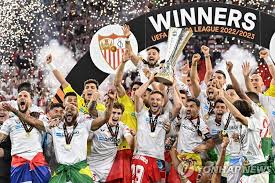
When it comes to dominance in this competition, one club stands alone. Sevilla holds the record for the most victories, having won the competition seven times since its inception. Wikipedia Their run of success is unparalleled in the history of the tournament. Real Madrid (winners in 1985 and 1986) and Sevilla (winners in 2006 and 2007, and 2014, 2015 and 2016) are the only teams to have retained their title. Wikipedia Sevilla's three consecutive triumphs from 2014 to 2016 in particular stand as one of the most extraordinary achievements in modern European football.
The UEFA Cup and UEFA Europa League has been claimed by 30 clubs from 11 different nations over the past 53 years. UEFA In terms of national dominance, the competition has been won fourteen times by teams from Spain, more than any other country. Wikipedia Italy and England follow, each with ten victories, underlining the consistent strength of clubs from those nations across different eras of the tournament.
The format of the competition has changed significantly over the years. For the first 25 years of the competition, the final was contested over two legs, one at each participating club's stadium, but in 1998, Inter Milan defeated Lazio in the competition's first single-legged final held at a neutral venue, the Parc des Princes in Paris. Wikipedia This shift to a single neutral-venue final brought a new level of spectacle and drama to the occasion, and it remains the format used to this day.
Some of the most memorable finals in the competition's history have been decided in the most nerve-wracking of circumstances — penalty shootouts. Villarreal's extraordinary 11–10 shootout victory over Manchester United in the 2021 final stands as one of the longest and most dramatic shootouts in the history of European finals. The 2000 final saw Galatasaray defeat Arsenal 4–1 on penalties after a goalless draw. These moments are part of what makes the Europa League such a compelling and unpredictable competition.
Eleven finals have featured teams from the same national association: Italy (1990, 1991, 1995 and 1998), England (1972, 2019 and 2025), Spain (2007 and 2012), Germany (1980) and Portugal (2011). Wikipedia The all-English finals in particular have captured enormous attention — the 2019 clash between Chelsea and Arsenal, and the 2025 rematch between Tottenham and Manchester United, both drew vast global audiences and reminded the world of English football's depth and quality.
On the other side of the coin, Benfica and Marseille have lost the most finals, with three losses in the competition Wikipedia — a painful record for two clubs with enormous ambition and passionate fanbases who have repeatedly come agonizingly close to glory without being able to claim it.
The competition also marked an important transition point in its history at the turn of the millennium. The last champions before the UEFA Cup was renamed to UEFA Europa League were Shakhtar Donetsk, who beat Werder Bremen 2–1 after extra time in the 2009 final. Wikipedia From the 2009/10 season onwards, the revamped Europa League brought a new group stage format, increased prize money, and a direct pathway to the Champions League for the winner — making it a far more attractive proposition for top clubs across the continent.
The winner receives the Europa League trophy, significant prize money, and automatic qualification to the following season's Champions League group stage. Topend Sports This Champions League berth has dramatically raised the stakes of the competition in the modern era, turning it from a secondary tournament into a genuinely coveted prize that elite clubs actively pursue.
Today, the UEFA Europa League continues to grow in prestige, reach, and quality. With Tottenham Hotspur as the reigning champions and clubs from across Europe competing for one of football's most coveted trophies, the competition shows no signs of losing its magic — and the next chapter of its remarkable history is already being written.